AI Transaction Matching for High-Volume Enterprise Close

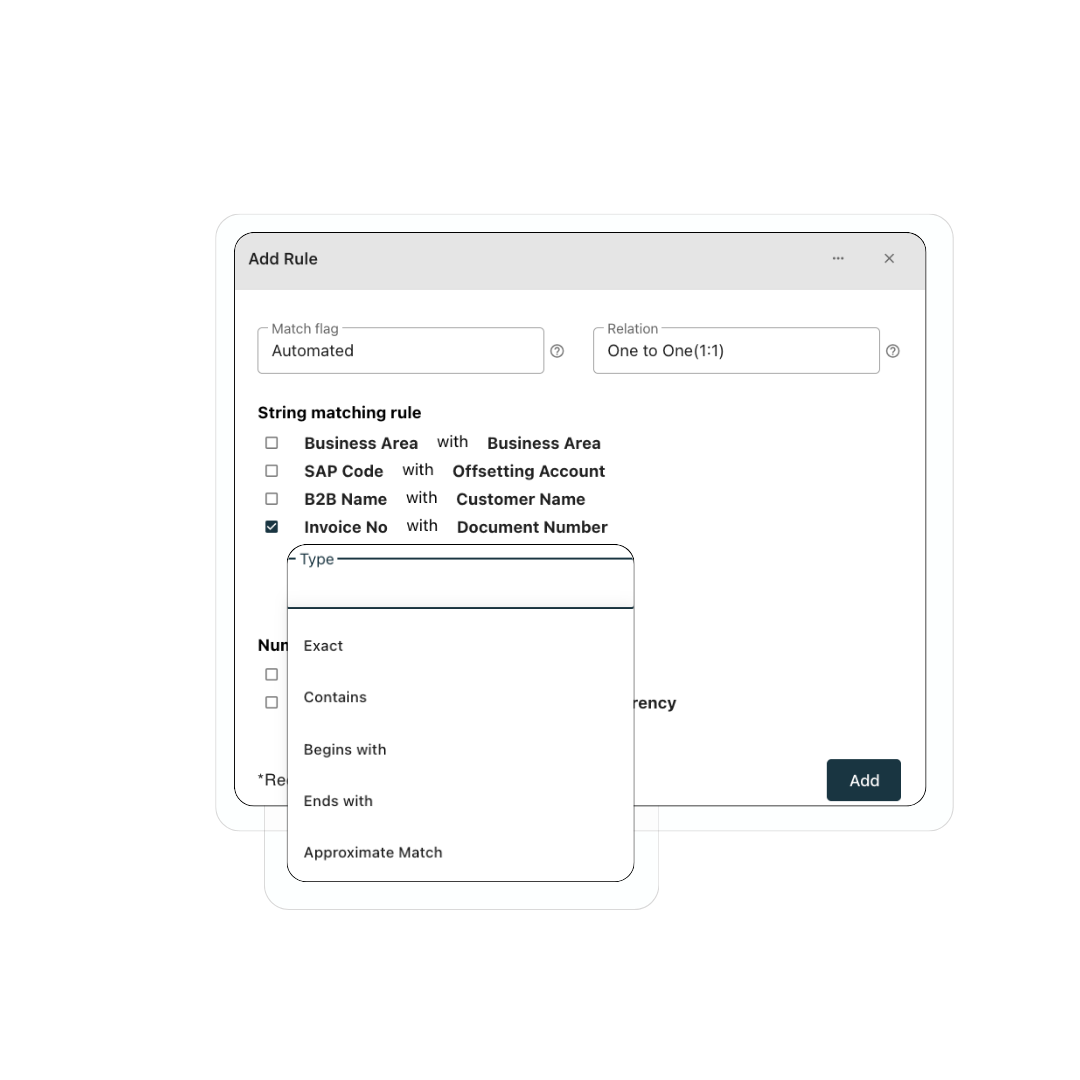
High-volume transaction matching is prepared continuously using a next-generation matching engine, so alignment happens before close pressure begins.
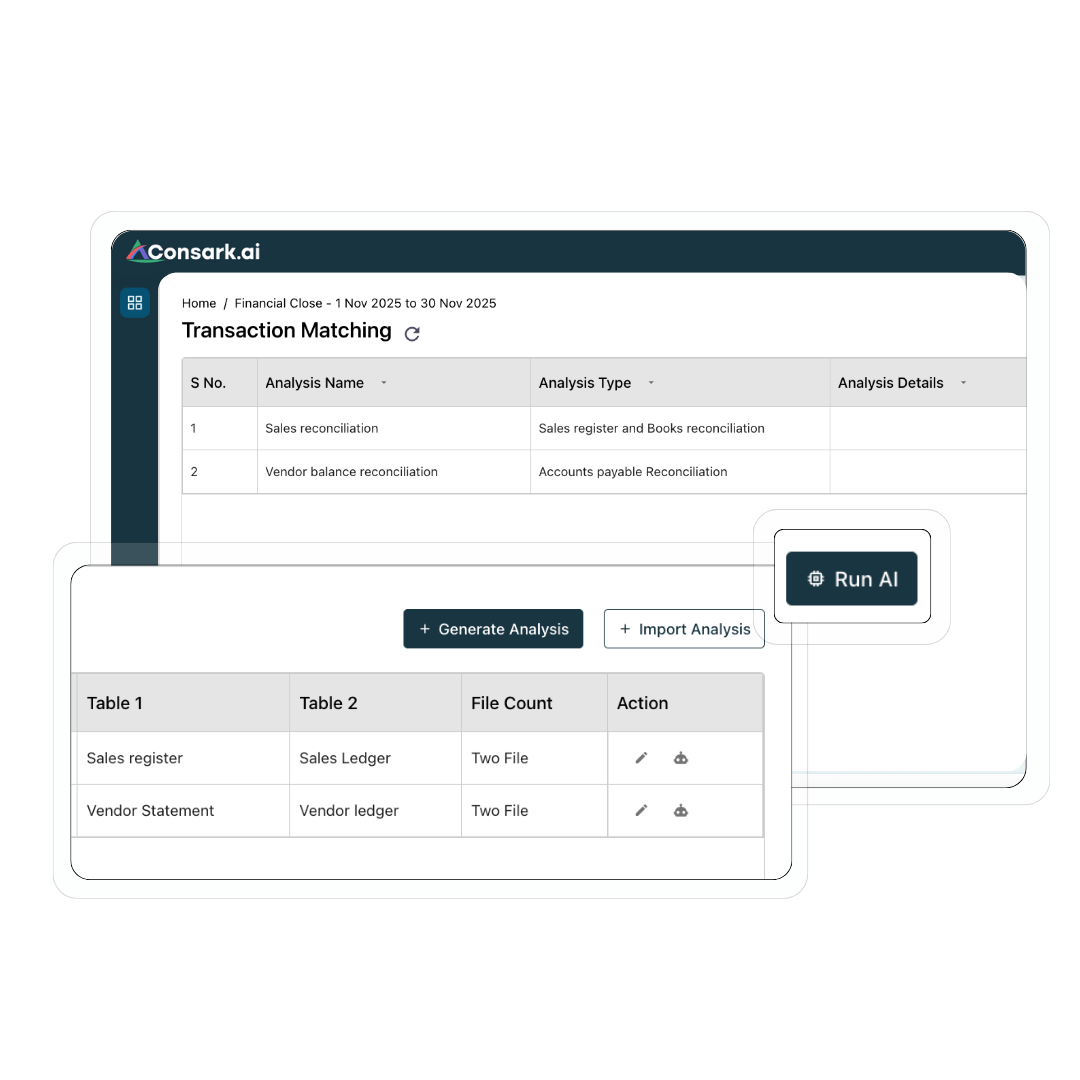
Messy inputs no longer stall the close.

Intelligence Built for Unstructured, Real-World Data.

Noa Agents go beyond rigid rules to resolve real-world accounting data.

• Fuzzy matching handles inconsistent descriptions and references.
• Pattern recognition identifies related transactions across sources.
• Partial matches, timing differences, and data irregularities are supported.
• 35% reduction in manual investigation.

Teams review decisions, not datasets.

Exceptions Arrive Ready for Judgment.

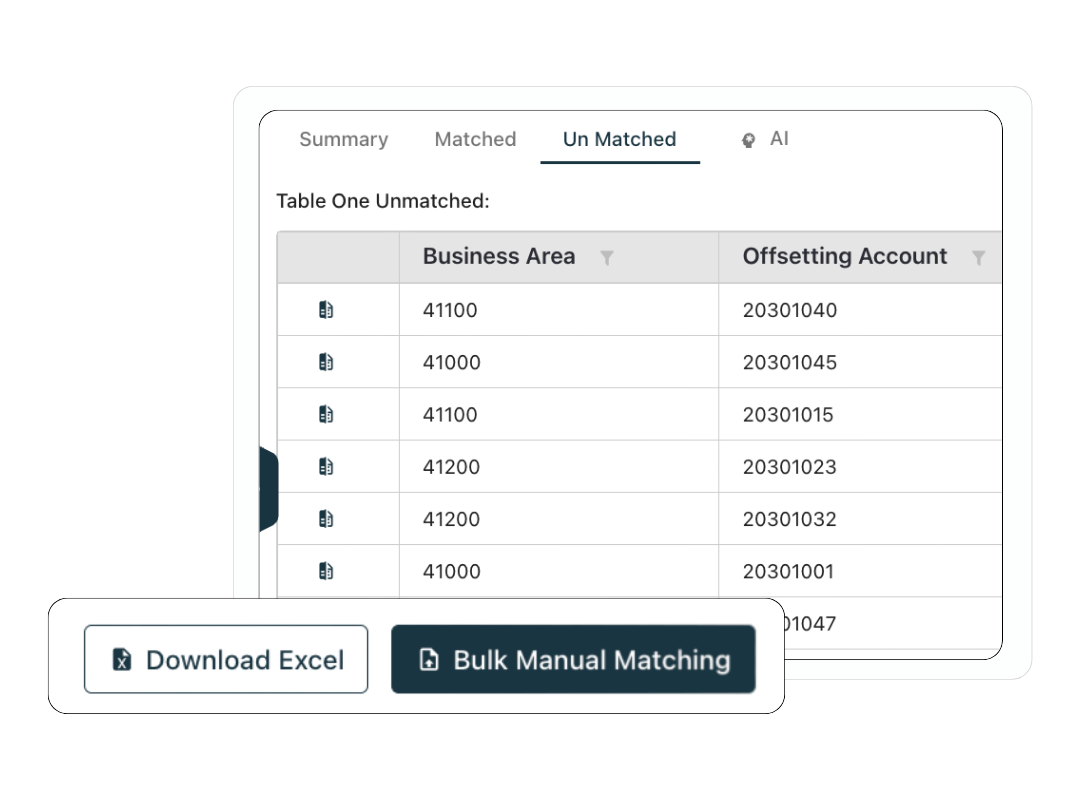
Only what requires professional review rises to the surface.

• Policy-driven thresholds automatically clear immaterial activity.
• Unmatched and partial matches clearly flagged.
• Each exception includes context, source data, and rationale.
• Review effort is focused and not fragmented.
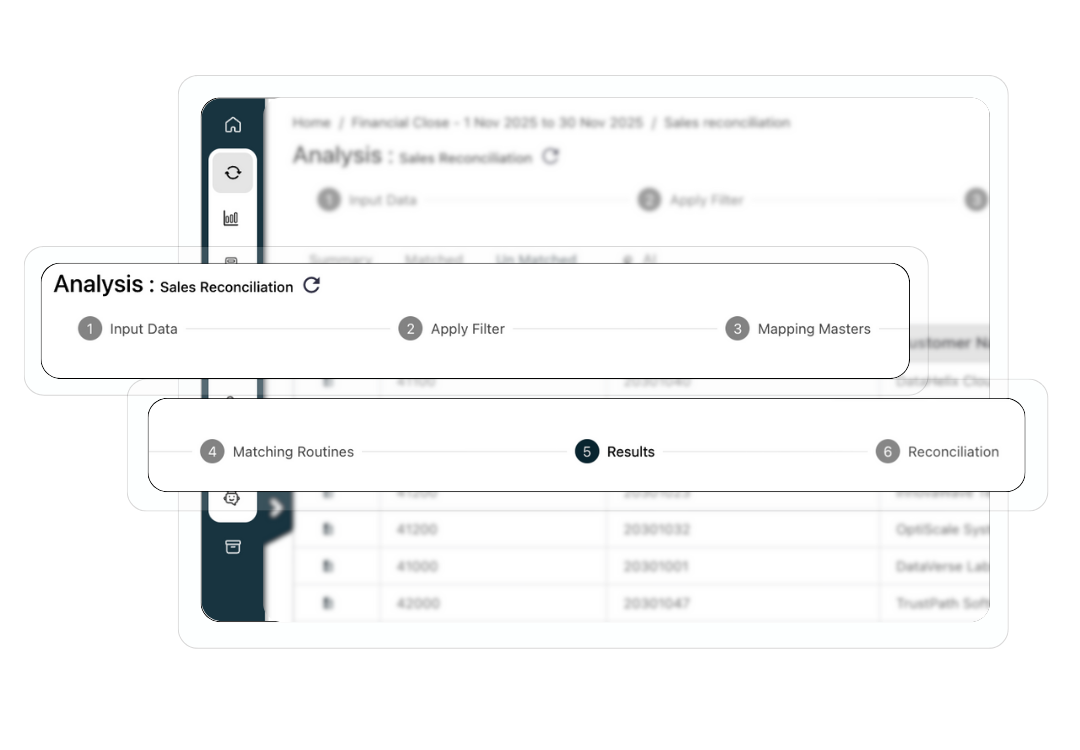
matching-exceptions
Matching strengthens the close instead of slowing it down.

Continuous Matching That Directly Powers the Close.

Transaction matching operates as part of close execution, not as a standalone activity.

• Matching outcomes flow directly into account reconciliations.
• Aligned transactions reduce downstream variance analysis.
• Parallel investigation across tools and spreadsheets eliminated.
• Close preparation accelerates as matching completes.

Speed comes with accountability.

Faster Approvals with Full Clarity.

Every match remains explainable and audit-ready.

• Clear lineage from source transaction to matched outcome.
• Reviewer actions, comments, and approvals preserved.
• Supporting evidence retained alongside results.
• Audit readiness is built in and not reconstructed later.
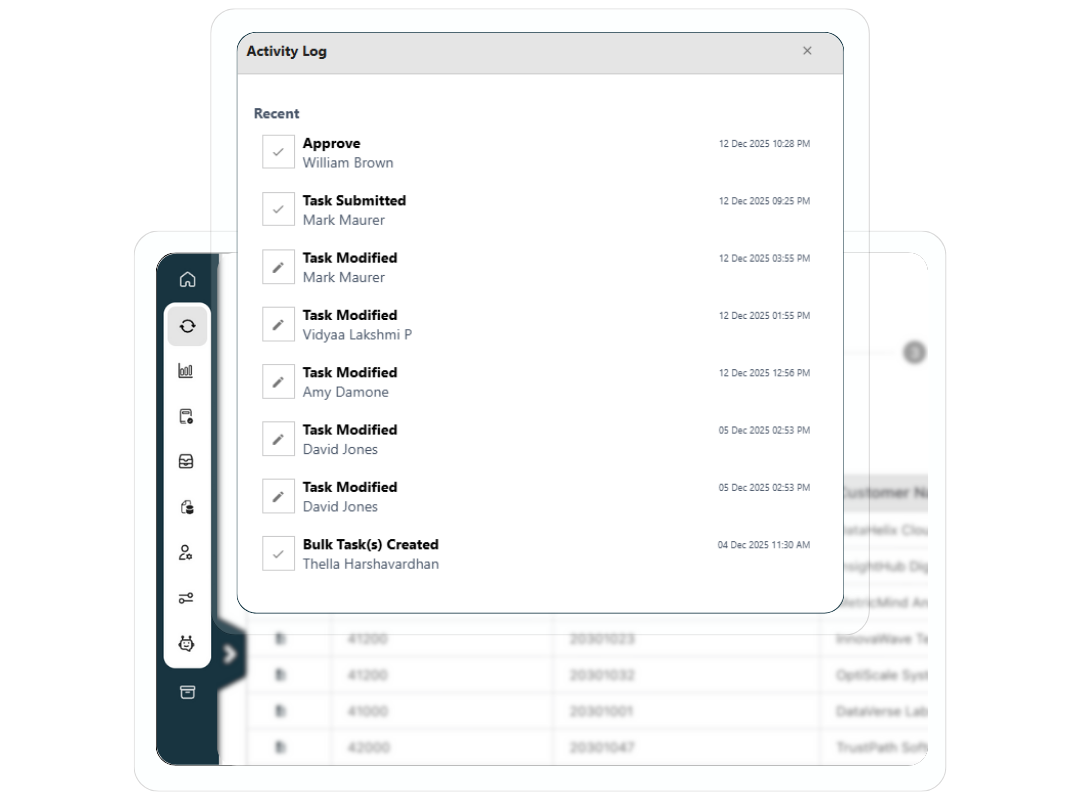

Used by finance teams operating at enterprise scale.

What Finance Teams Are Seeing in Practice

FAQ

Automated transaction matching is the automation of reconciling transactions from two or more sources of information by means of software. The matching engines use algorithms that either follow a rules-based approach or utilize AI capabilities to identify corresponding transactions, confirm matches, and generate exceptions that require human examination. For enterprises that handle a high number of transactions within different organizations, automated matching helps eliminate manual steps that have traditionally slowed down the financial close process.
AI transaction matching goes beyond rigid rule sets to handle the inconsistencies common in real-world financial data. It uses pattern recognition to identify related transactions with different descriptions, amounts, or reference numbers, fuzzy matching to resolve inconsistent formatting across sources, and learning logic to improve match rates over time based on reviewed exceptions. The Noa agents from Consark match transactions using rules driven by accounting logic and customized for each customer's data.
Transaction matching by automation can be utilized for bank/GL reconciliation, AR/AP matching, inter-company transaction matching, payroll reconciliation, sales/payment processor matching, and sub-ledger/GL reconciliation processes. Consark offers one-to-one, one-to-many, and many-to-many types of matchings, as well as multi-currency and multi-entity environment.
Transaction matching is a subset of account reconciliation. In matching, an individual transaction from one source is matched against another to ensure that they match. Reconciliation, on the other hand, is the overall process of ensuring that account balances are correct and complete and involves matching among other things. Consark has systems for performing both matching and account reconciliation in a seamless manner since the former is done automatically for reconciliation purposes.

Transaction Matching That Reduces Risk with Confidence.

Free your team from manual matching, without losing control.